
The Beginner's Guide to Choosing a Floor Lamp for Small Spaces
A small room rarely suffers from too little light. It suffers from light in the wrong place. A floor lamp is the simplest fix you can make without calling an electrician or drilling a hole in the wall, and it moves with you when you rearrange the furniture. But floor lamps are also bulky objects, and the wrong one will quietly eat the corner it was bought to improve. The difference between a lamp that fits and one that crowds is not really about style. It comes down to four practical things: the size of the base, the height of the shade, the direction the light travels, and where you actually put the thing.
Start With the Base, Not the Shade
Most people fall in love with a shade and only check the base when the box is open. In a tight room, that order should be reversed. The shade floats above the furniture; the base is what fights for floor space.
Look at the footprint first. A weighted disc base of around nine to eleven inches across is easy to tuck beside an armchair or slip partly under the front edge of a sofa. A tripod base with splayed legs can spread to twenty inches or more at the floor, which is lovely in a large room and awkward in a hallway. If the corner you have in mind is narrow, measure the diagonal width at floor level, not just the wall-to-wall distance — that is where the legs will actually land.
Weight matters as much as width. A lamp with a small, heavy base is more stable than a wide, light one, and stability is what lets you push a lamp into a corner without worrying that a passing sleeve will send it over. If you have children, a large dog, or a hallway that gets a lot of traffic, this is not a detail to skip. A slim lamp with a low centre of gravity is the safer choice.
Try the template trick
Cut a paper circle or square to the exact size of the base you are considering and leave it on the floor in the intended spot for a day or two. You will learn quickly whether it blocks the path to the window, catches your toe, or makes the corner feel pinched. It takes five minutes and saves a return.
Measure the Space Before You Measure the Lamp
Before shopping, write down three numbers: the width of the corner from the nearest furniture to the wall, the height from floor to ceiling in that spot, and the distance to the nearest socket.
Two things get forgotten. First, skirting boards and radiators push a lamp forward into the room by several inches, so a lamp that looks perfect against a bare wall may sit too far out once the skirting is behind it. Second, walkways need room. As a rule of thumb, leave about thirty inches of clear floor for a main path. If your lamp reduces that to twenty, every trip through the room becomes a small negotiation.
The socket is the unglamorous detail that decides placement. A lamp placed for looks but plugged into a trailing extension cord across the floor is a trip hazard, and in a small room the cord has nowhere to hide. Check the cord length, note whether the switch is on the cord, the socket, or the lamp itself, and consider a slim inline switch or a foot switch if the lamp will sit behind furniture.
Height: Match the Lamp to the Seat, Not the Ceiling
A floor lamp is usually read as a companion to a chair or sofa, so it should be sized to the person sitting in it. The most comfortable arrangement puts the bottom edge of the shade at roughly seated eye level — somewhere between forty and forty-six inches from the floor for most people — so the bulb is not glaring into your face and the light still falls onto a book or a lap.
Total lamp height is the second check. Most standard floor lamps land between fifty-five and sixty-five inches. In a room with a low ceiling or a sloped attic wall, a shorter lamp in the low fifties will feel calmer, and the extra headroom keeps the room from looking cramped. If the lamp will stand behind a sofa, make sure the shade clears the sofa back rather than sitting level with it, otherwise all the light lands on upholstery.
One more thing: a tall, thin lamp in a small room draws the eye upward, which can make a low ceiling feel higher. A short, wide lamp does the opposite. Use that deliberately.
Which Way Should the Light Point?
Shade direction changes how big a room feels. Downward light pools on a table or a book and leaves the walls dark. Upward light washes the ceiling and comes back down as soft ambient brightness, which makes small rooms read as larger and more open. If you have only one lamp to spend on a small room and no ceiling fixture, an uplight or a torch-style lamp aimed at the ceiling usually does the most work.
For reading, choose a lamp with a downward shade and a shade deep enough that the bulb is hidden when you are seated. For a desk in a corner, an adjustable arm gives you light on the task without lighting the whole room. And if the lamp sits near a television, angle it away from the screen — a bright shade reflected in a dark screen is distracting in a way people rarely blame on the lamp.
Shade material matters more than shape
An opaque shade throws light in one direction. A translucent fabric or paper shade glows and spreads light all around, which is flattering in a small room but can be glary if the shade is at eye level. A shade with a diffuser at the bottom softens the pool of light under it. Pay attention to the shade's diameter too: a twelve- to fourteen-inch drum suits a narrow corner, while an eighteen-inch drum can dominate a small room even if the base is modest.
Placement Rules That Keep Corners Open
Where the lamp stands decides whether the corner feels used or blocked. A few habits worth keeping:
- Angle it into the corner. Pull the lamp a few inches off both walls and turn it slightly inward. The corner reads as lit rather than as occupied.
- Put it behind, not beside. A lamp tucked behind the shoulder of a chair lights the page and leaves the walkway clear.
- Keep it out of the doorway line. If you can see the lamp immediately as you enter, it is probably in the way.
- Do not block the window. A lamp standing in front of glass eats daylight, which small rooms can least afford.
- Leave the light switch reachable. A lamp you have to climb behind the sofa to turn on will stay off.
- Use the empty corner you already have. The dead space between a sofa end and the wall is often the best-lit spot in the room, and nobody sits there.
Small Details That Save Space
A pale or matte shade and a slim stem make a lamp visually lighter; a dark, heavy base against a pale floor makes it look heavier than it is. Warm bulbs — around 2700K to 3000K — keep a small room cosy rather than clinical. And if the lamp is dimmable, you gain the ability to turn one corner into evening light without adding a second fixture, which is often the whole point.
A Five-Minute Checklist Before You Buy
- Measure the corner width, ceiling height, and distance to the nearest socket.
- Check the base footprint against your paper template, including skirting boards.
- Confirm the shade's bottom edge sits near seated eye level.
- Decide whether you need downward task light, upward ambient light, or both.
- Test the switch and cord length against where the lamp will actually stand.
Get those five right and the lamp disappears into the room the way good lighting should: you notice the light, not the object making it. Style can come last. In a small space, fit comes first, and a well-fitted lamp will make even a modest corner feel finished.
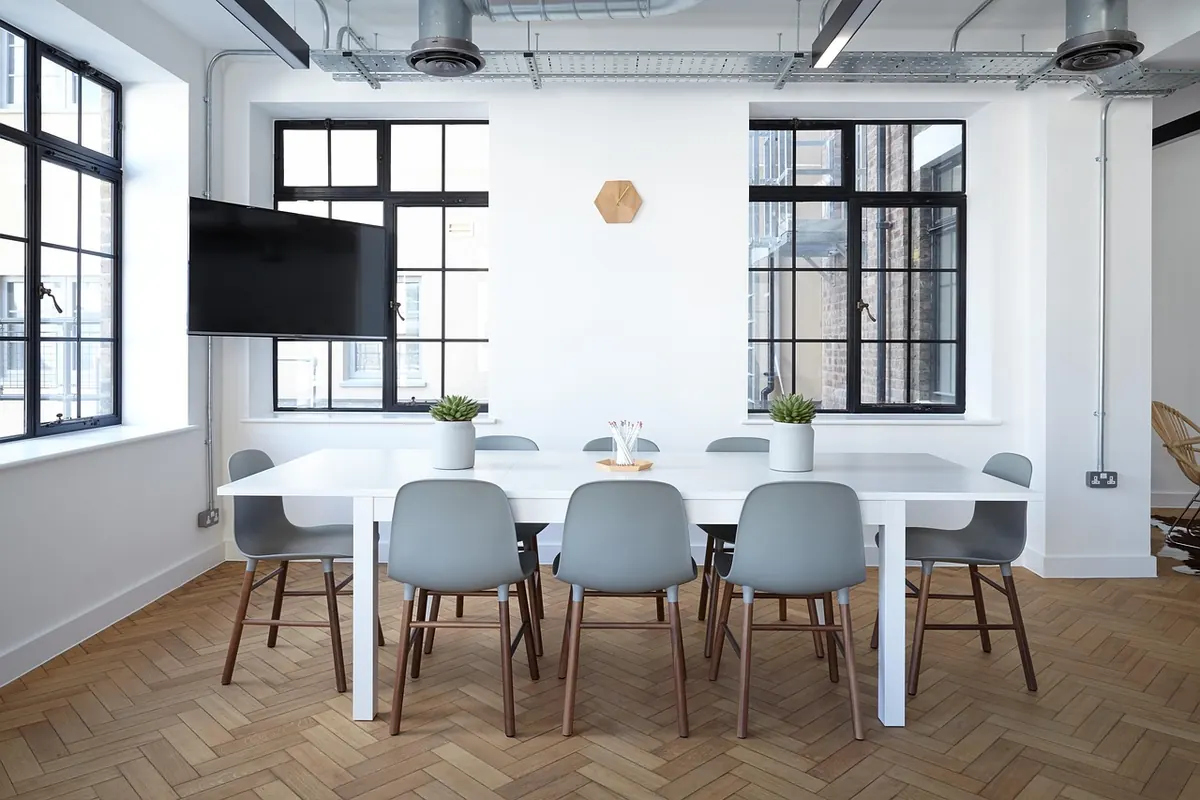
Photo: Pexels / Pixabay